The Rocket Plane That Touched Space
Dropped from a B-52, the X-15 blasted past Mach 6 and flew high enough that some pilots earned astronaut wings — in an airplane.
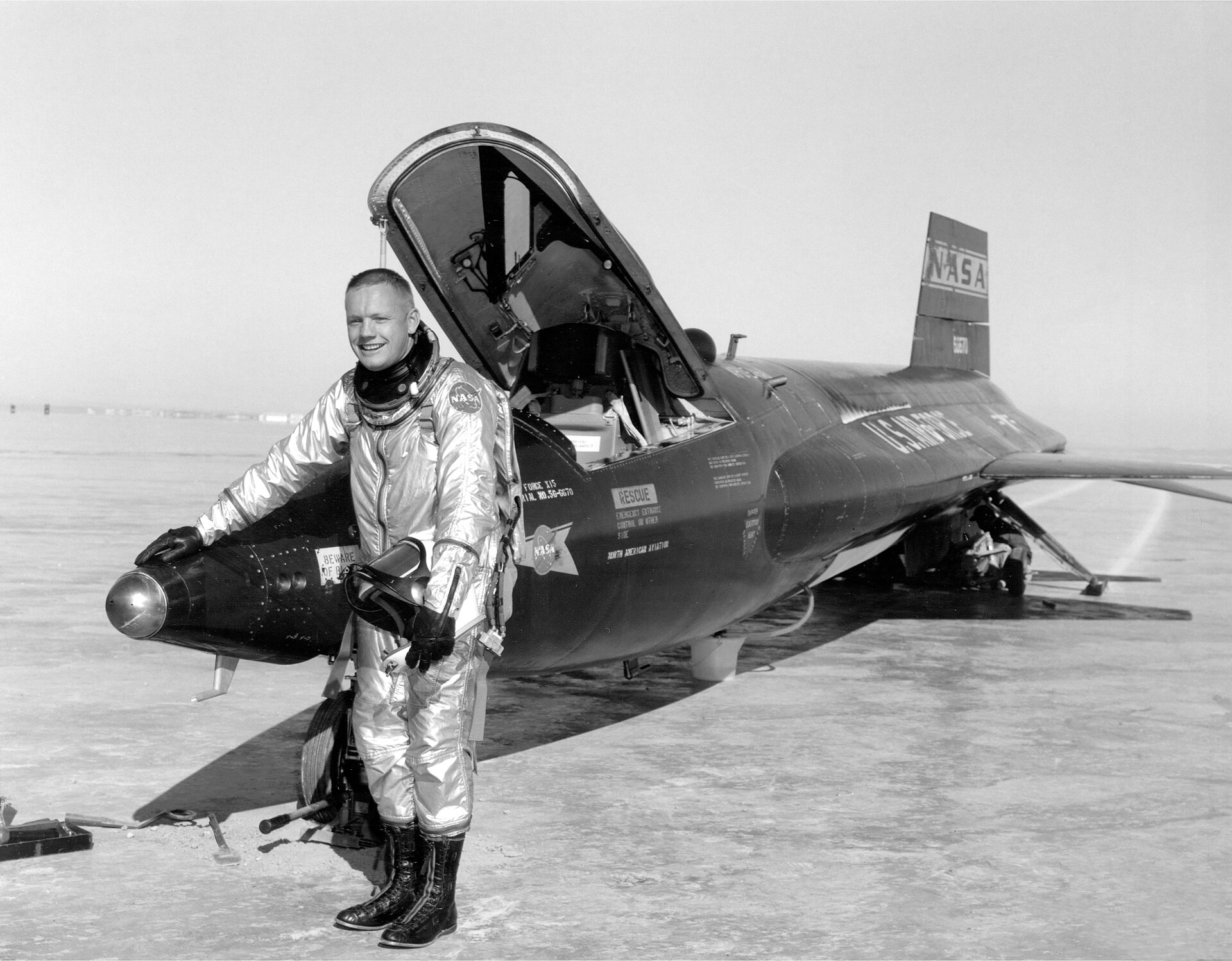
Airplane, rocket, almost spacecraft
The North American X-15 was an airplane that used a rocket engine. A NASA/U.S. Air Force/Navy research program flew it from 1959 into 1968 to explore hypersonic speed and the edge of space — not to fight, but to measure.
A modified B-52 carried the X-15 under its wing and dropped it at altitude. The pilot lit the rocket, and the black needle accelerated past speeds ordinary jets never see. The record run hit about Mach 6.7 — over 4,500 mph. Other flights climbed above 50 miles, high enough that the U.S. awarded astronaut wings to some pilots for airplane flights.
The shape was a long fuselage with tiny wings, all-moving tail surfaces, and a wedge vertical fin. At those speeds, heating and stability become the story. The skin used Inconel X, a nickel alloy that could take the thermal load better than normal aluminum.
What the research was for
Every instrumented flight fed charts for later spacecraft and high-speed aircraft. How do controls work when air is thin? How hot does the nose get? How do you reenter denser air without shaking apart? The X-15 answered with flight data, not speeches.
Twelve pilots flew the three X-15 airframes on 199 flights. Neil Armstrong flew the X-15 before his Gemini and Apollo years — a reminder that research cockpits and space cockpits shared people. The program also saw serious risk: an accident in 1967 killed pilot Michael Adams. The hangar tells that briefly and respectfully. Hypersonic research is not a video game.
After the X-15, engineers kept chasing high speed with other vehicles. The black rocket plane remains the clearest kid-readable bridge between “jet” and “space”: still an airplane with a stick and wings, yet fast and high enough to rewrite the rulebook.
Hangar voices
Captain, ten, writes Mach numbers on the board and underlines “research.” Co-Pilot, eight, wants to know if the B-52 got jealous. Wingman, six, calls it the space dart and asks if it had cup holders. It did not need cup holders. It needed a pressure suit.
Try this: drop-glide, then boost (paper)
Make a paper dart. “Carry” it on a larger folded B-52-shaped glider, then let the dart drop and fly on its own. For a second run, give the dart a gentle forward flick at release to pretend a rocket kick. Compare paths. Talk about why a real X-15 needed a mothership: rockets drink propellant so fast that taking off from a runway under pure rocket power was not the research plan.
Paper drops only. No model rockets aimed at “space” in the yard without proper clubs and rules — and never indoors.
Source note
North American X-15 rocket research aircraft; flown 1959–1968; air-launched from B-52; ~199 flights; speeds to ~Mach 6.7; altitudes above 50 miles on some flights; NASA/USAF/USN program; Inconel structure; research into hypersonic flight and near-space conditions.
Crew note
Captain keeps the story on instruments and heat, not dogfights. Co-Pilot draws the B-52 drop every time. Wingman earned a paper “astronaut sticker” for reading the altitude line twice.