The Helicopter That Carried a Whole House
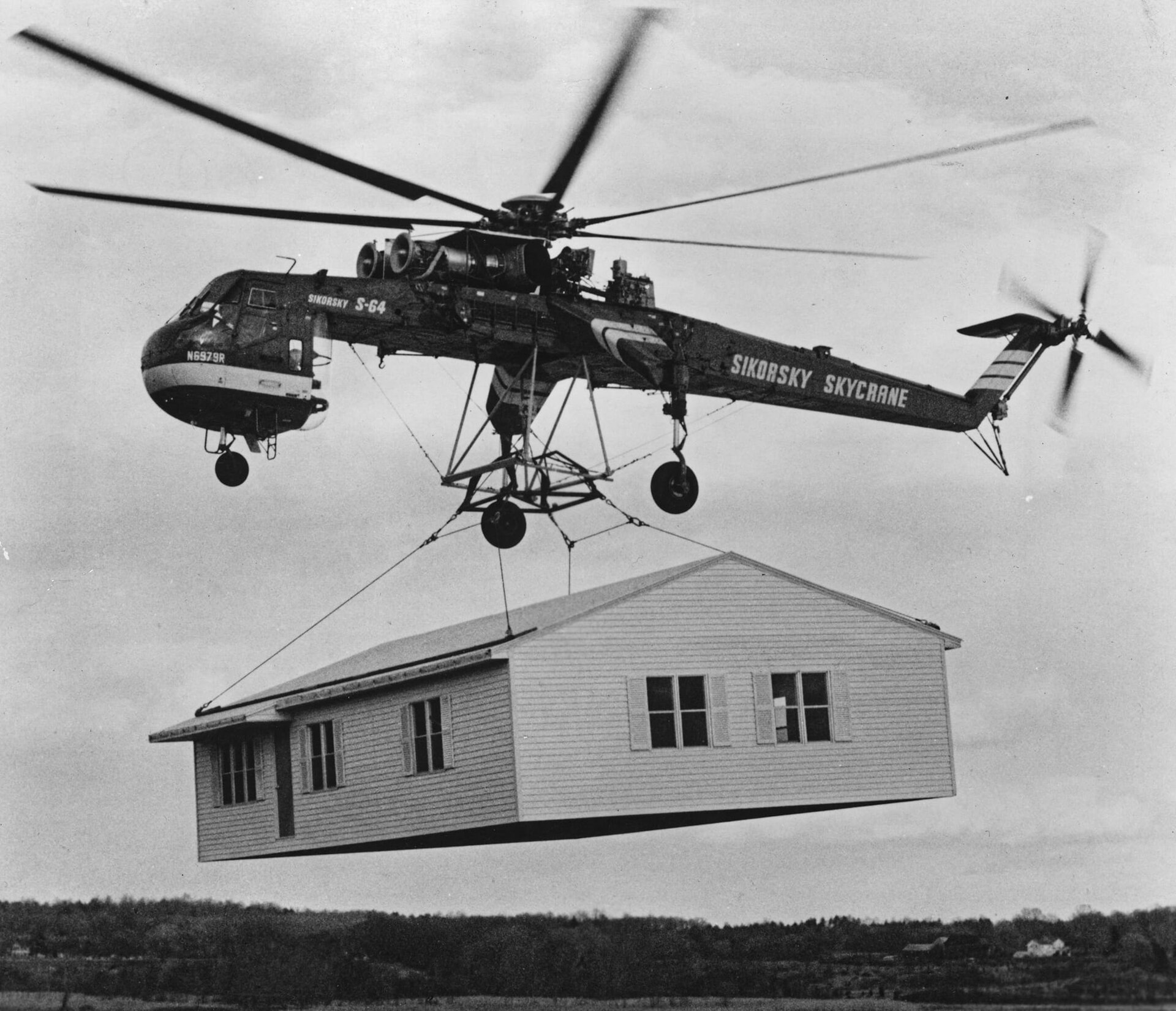
The Sikorsky Skycrane is basically a flying crane — a skinny fuselage and huge rotor that once lifted an entire house through the air.
A fuselage that is mostly boom
Most helicopters wrap people and engines in a fat cabin. The Sikorsky Skycrane (S-64 / military CH-54) does the opposite. It is a flying crane: cockpit up front, engines and a huge rotor on top, and a skinny spine that leaves the belly open for whatever you hang underneath.
That empty space is the point. Need to move a bulldozer piece, a transmission tower section, a firefighting tank, or — yes — a house? Hook it up, lift carefully, and translate across the sky. Famous publicity photos show a Skycrane carrying a complete house, which is the kind of image that permanently rewires a kid’s brain.
Igor Sikorsky’s company designed the type for heavy external lift. Military CH-54 Tarhe variants hauled oversized loads in the 1960s–70s. Civil S-64 Skycranes later fought fires with belly tanks, built remote towers, and did the awkward jobs fixed-wing planes cannot hover for.
Why skinny wins for cranes
A wide cabin would block the load and add weight. The Skycrane’s crew can see the hook area. Some configurations even used aft-facing seats for loadmasters watching the cargo. Twin turbines feed a six-blade main rotor with serious diameter. Ground crews still do the real magic: rigging, weight checks, and radio calls that keep the house from becoming a wrecking ball.
The hangar loves this story because it is pure civil-engineering theater. No need for combat chapters. A helicopter that treats the sky like a construction site is already enough.
Heavy-lift helicopters earn their keep on jobs that trucks cannot reach and fixed-wing cargo planes cannot hover over. A Skycrane can place a load within feet of a ridge pad, then leave without needing a runway carved into the mountain. Firefighting tanks turn the same belly airspace into a water or retardant reservoir. The skinny airframe is not a missing cabin — it is cleared workspace.
Brothers and the house
Captain, ten, wants every model to include a tiny house on a string. Co-Pilot, eight, asked if the house kept its furniture (depends on the movers). Wingman, six, packed a doll bed “for the flight” and declared himself loadmaster.
When you see powerline work or firefighting tanks under a skinny helicopter, you are watching the Skycrane idea still earning rent.
Try this: string-crane house
Build a sugar-cube or cardboard house. Suspend it from four strings tied to a stick “rotor head.” Walk slowly and try to keep the house level through a doorway. That is load stability practice. Add a paperclip for imbalance and feel the swing.
Living-room cranes only. No real helicopters, no climbing roofs to attach strings to drones.
Source note
Sikorsky S-64 Skycrane / CH-54 Tarhe heavy-lift helicopter; crane-style fuselage for external loads; civil and military heavy-lift and firefighting tank work; iconic house-lift demonstrations; six-blade main rotor heavy-lifter layout.
Crew note
Captain captions the hero photo “engineering, not magic.” Co-Pilot keeps adding windows to the toy house. Wingman salutes every construction crane on car rides now, which is adorable and slow.