The Jet That Breaks the Sound Barrier Without Waking the Dog
In June 2026 a skinny NASA jet went supersonic over the California desert — and the chase plane made more noise than the star of the show.
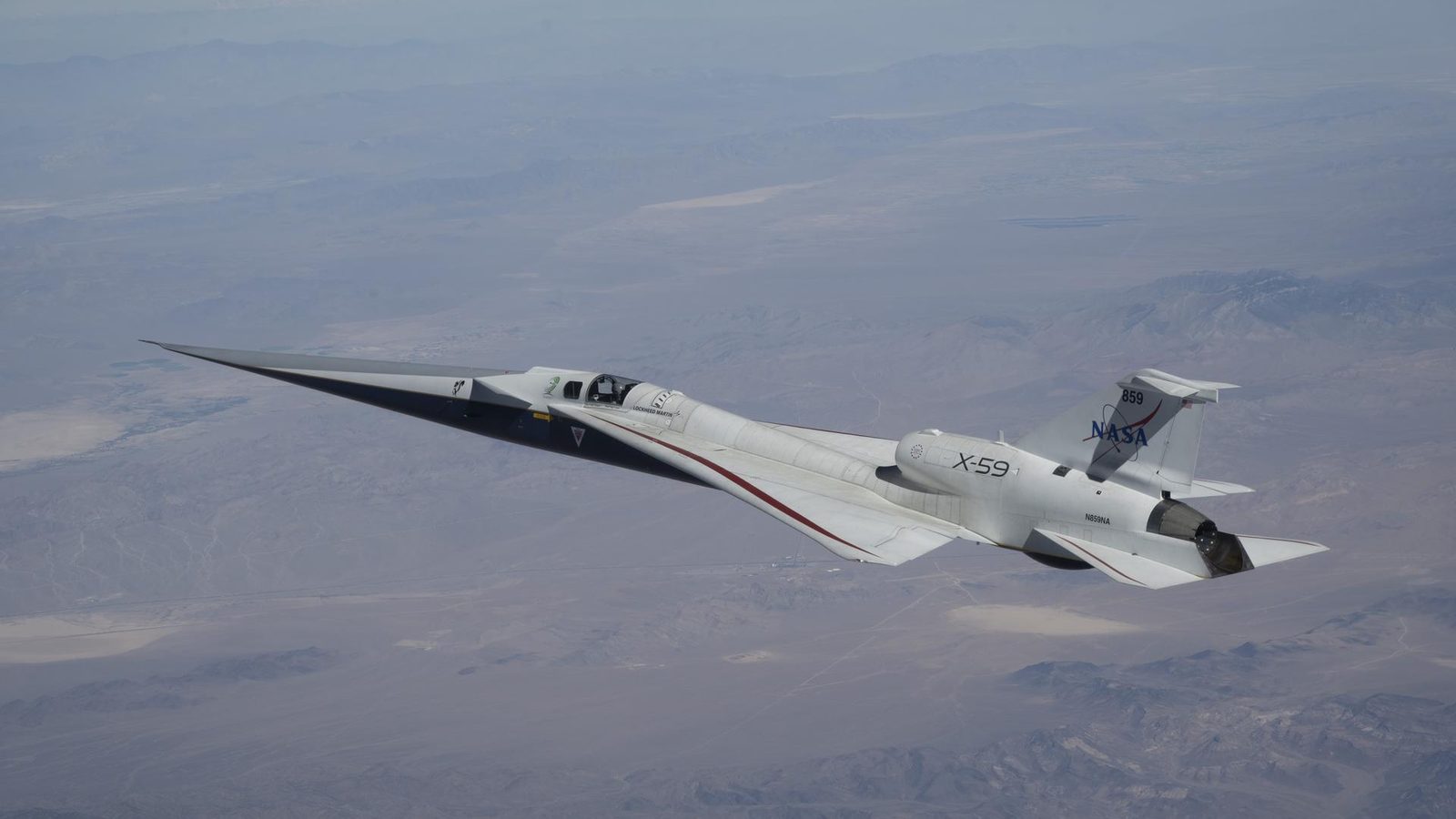
A needle with a camera for a windshield
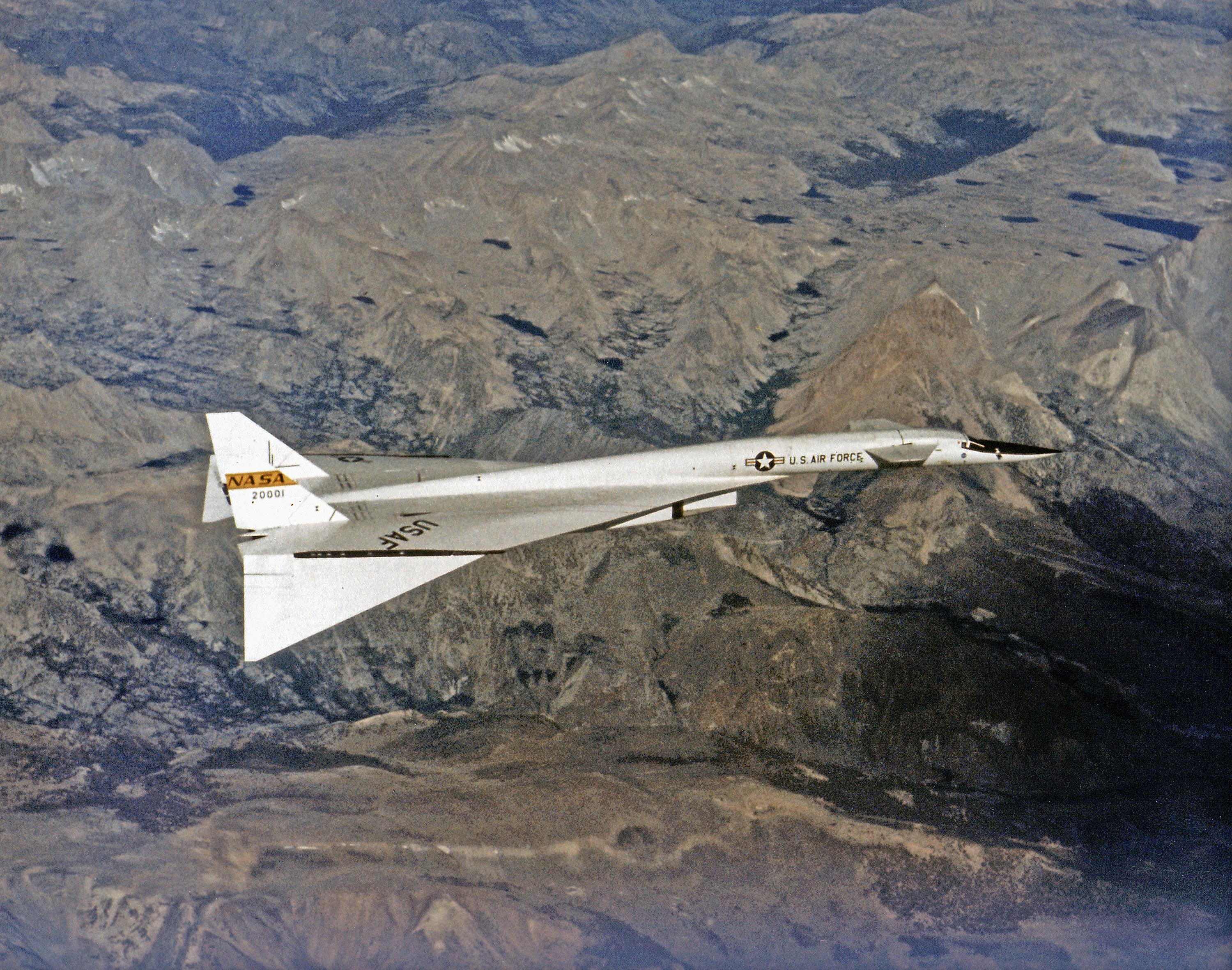
The X-59 looks like someone stretched a jet until the nose became a spear. That long skinny snout is how you sneak past the speed of sound without smacking the ground with a boom.
This is NASA’s Quesst mission. Lockheed Martin’s Skunk Works built the airplane. First flight was 28 October 2025. First supersonic flight was Friday, 5 June 2026. NASA test pilot Jim “Clue” Less lifted off from Edwards Air Force Base at 11:08 a.m. PDT. The flight lasted 81 minutes. He reached about Mach 1.1 — 713 mph — at 43,400 feet.
An F-15 flew chase. Its own booms drowned out whatever the X-59 made that day. Captain, ten, laughed. You cannot brag about a quiet thump if your friend is slamming a door beside you.
The cockpit is the trick. The nose blocks the forward view, so the pilot uses cameras — NASA calls it the eXternal Vision System — instead of a regular windshield stare. You fly a needle by watching screens, because the shape that keeps the boom down also steals the scenery.
Wingman says the nose looks like a crane trying to drink from a lake.
Boom versus thump
When a plane outruns its own sound, pressure piles up into shock waves. On an older supersonic airliner like Concorde, those shocks arrived on the ground as a boom — a slap. That boom is why overland supersonic airliners were banned. Nobody wanted dishes rattling two towns over.
The X-59 is shaped so those shock waves stay spread out. Spread out, they are supposed to arrive as a quiet thump instead of a boom. Tap a table with one finger. Then clap over the same table. Same furniture. Different insult.
It is not already proven over cities. As of late August 2026, the quiet-thump testing over real neighborhoods is still ahead. Anyone who tells you the dog has already slept through it is guessing.
What the desert flights actually did
On 5 June, the job was to go supersonic at all and come home with data. Mach 1.1 at 43,400 feet is past the barrier, but it is not the later “mission” point.
A week later, on 12 June 2026, the X-59 flew its first “mission conditions” flight: Mach 1.4, about 924 to 925 mph, at about 55,000 feet. That is the speed and height meant for later community overflights. Later, NASA will fly over U.S. communities and ask people what they heard. Then they will share the data with regulators. The airplane is a flying question, not a finished airliner.
Co-Pilot asked if thump means silent. No. Thump means quieter than a boom, if the shape does its job. Silent would be a glider. This thing still has an engine. The bet is about how the shocks land, not whether physics took the day off.
Why a quiet bang still matters
Speed is easy to sell. Neighbors are harder.
If you want to cross a continent before lunch, you have to go fast over land, not just over ocean. The old rule said: not if you boom. The new experiment says: maybe, if the boom turns into a thump people can live with. NASA is planning to ask actual humans, which is the least fancy and most honest part of the program.
The long nose, the camera cockpit, the careful height and Mach number — those are tools for that ask. Shape the shocks. Fly the recipe. Measure what people hear. Hand the numbers to the folks who write the rules.
Try this: clap, tap, dart, glide
Stand at a wooden table. Clap once, hard, a foot above it. That is a boom analog — a fat slap. Now tap with one fingertip. That is a thump analog. Same room. Your ears already know the difference. The X-59 is trying to turn the clap into the tap, high over a town that did not sign up for a concert.
Then fold two paper planes from this site: The Dart (fast) and the Cloud Glider (quiet and slow). Throw both down the same hallway. Talk about shock versus glide. The dart is in a hurry. The glider eases through. Neither is supersonic. You are feeling two personalities of air: shoved, and stroked.
If you want more, look up NASA Quesst STEM. Further reading, not homework.
Source note
NASA Quesst / X-59 flight reports (first flight 28 Oct 2025; first supersonic 5 June 2026; mission-conditions flight 12 June 2026).
Crew note
Captain wrote Mach 1.1 and Mach 1.4 on the hangar whiteboard and will not erase them. Co-Pilot keeps asking if the camera cockpit means you could fly in a hoodie, which is not how test pilots dress. Wingman practiced the table tap until dinner, then asked if the dog gets a vote when the community flights start.