The Giant Flying Boat That Became a Firebomber
Martin Mars flying boats were huge Navy transports; survivors later scooped lake water and dropped it on forest fires like airborne elephants.
From Navy haul to lake scoop
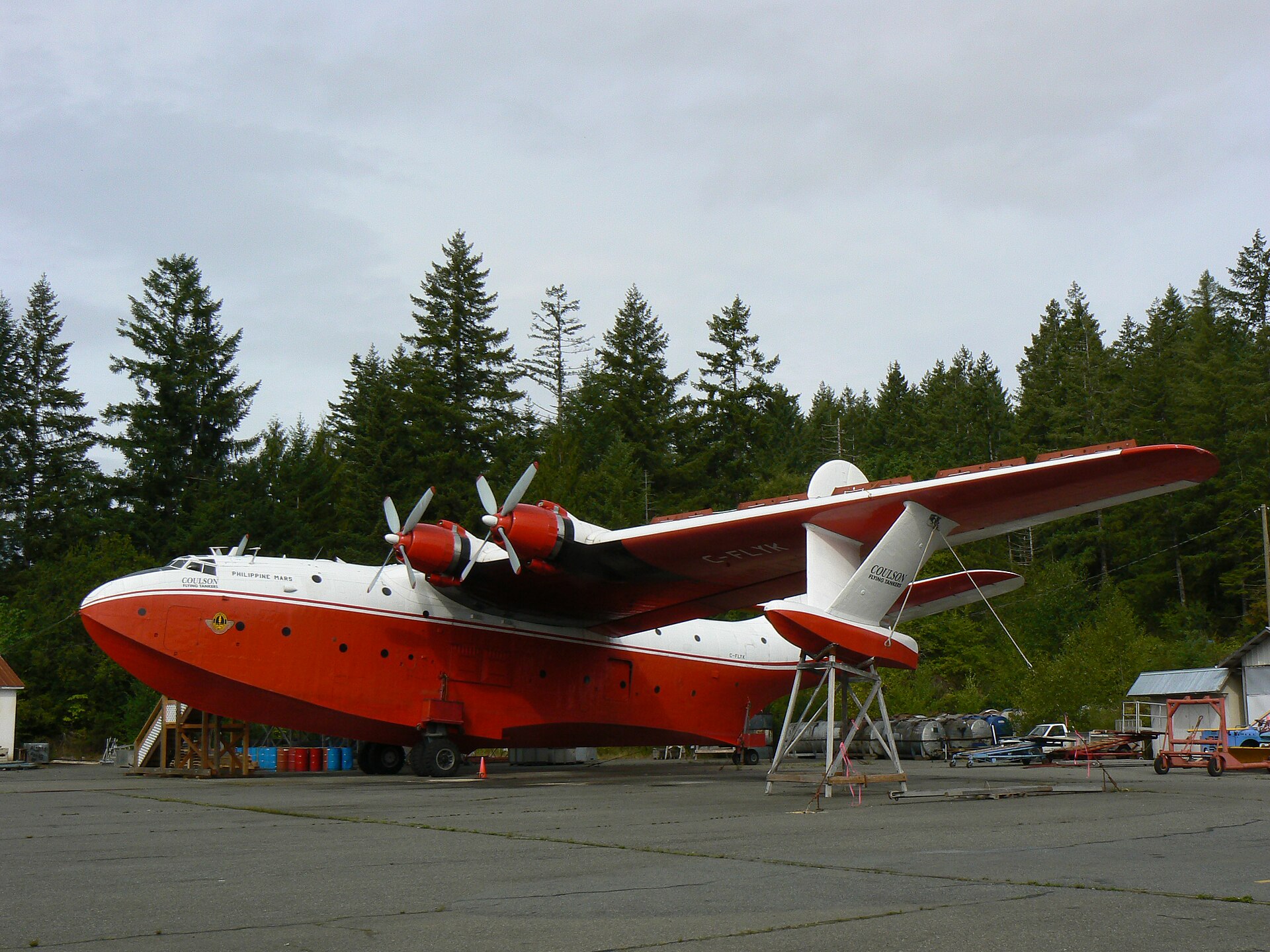
The Martin JRM Mars was a giant American flying boat built for the U.S. Navy in the 1940s. Think long hull, high wing, four huge radial engines, and enough cabin volume to move people and cargo across Pacific distances when runways were scarce and ships were slow.
Only a small handful were completed. After their Navy transport years, the story took a second act that kids in this hangar love even more: firefighting. Converted Mars flying boats worked in Canada as water bombers. They could skim a lake, scoop thousands of gallons into belly tanks, climb out, and drop a long wet footprint on a forest fire. An airborne elephant with a hose, basically — except the “hose” was a bomb bay’s worth of lake.
Why a boat still helps fires
Land-based tankers need an airfield and a reload. A scooping flying boat can refill from a nearby lake in a rhythm that keeps water moving while crews on the ground cut line. The Mars was huge even by flying-boat standards — wingspan around 200 feet — so each drop mattered.
Two famous survivors carried civilian names like Hawaii Mars and Philippine Mars. They flew for decades after World War II paperwork faded, which is rare for 1940s giants. Maintenance was constant. Parts were treasure. Crews who knew how to land a house-sized hull on glassy water were not replaceable by an app.
Eventually even legends retire. Museums and preservation groups have worked to keep Mars history visible — including the engineering of those scoop systems — so the second career does not get forgotten behind the first.
Hangar angle
Captain, ten, wants the type line to say “transport, then firefighter,” in that order. Co-Pilot, eight, asked how many backyard pools equal one scoop (too many). Wingman, six, makes elephant noises whenever someone says “water drop,” which is now an official hangar hazard.
This is not a combat glory tale. It is longevity and reinvention: a Navy hauler that learned a civilian job where the cargo was water and the runway was a lake.
Try this: scoop-and-drop (yard safe)
Fill a plastic cup with water. Walk fast past a kiddie pool or bathtub and practice dipping the cup without falling in — that is your “scoop.” Then “drop” on a chalk fire drawn on the driveway. Time how long between scoop and drop. Talk about why a real Mars crew cares about wave height, weight, and climb.
No real aircraft. No garden-hose “bombs” aimed at people or pets.
Source note
Martin JRM Mars flying boat; 1940s U.S. Navy transport; small production run; postwar conversions to civilian water bombers in Canada; ~200 ft wingspan class; scoop-and-drop firefighting operations; surviving airframes preserved/retired after long second careers.
Crew note
Captain forbids calling the fire drops “attacks.” Co-Pilot draws lakes as runways on every map. Wingman named his elephant plush “Mars,” which is confusing at story time.