The Tiny Helicopter That Flew on Mars
Ingenuity was designed for five flights on Mars — and kept going for dozens, proving rotors can fly in air thinner than Earth’s mountaintops.
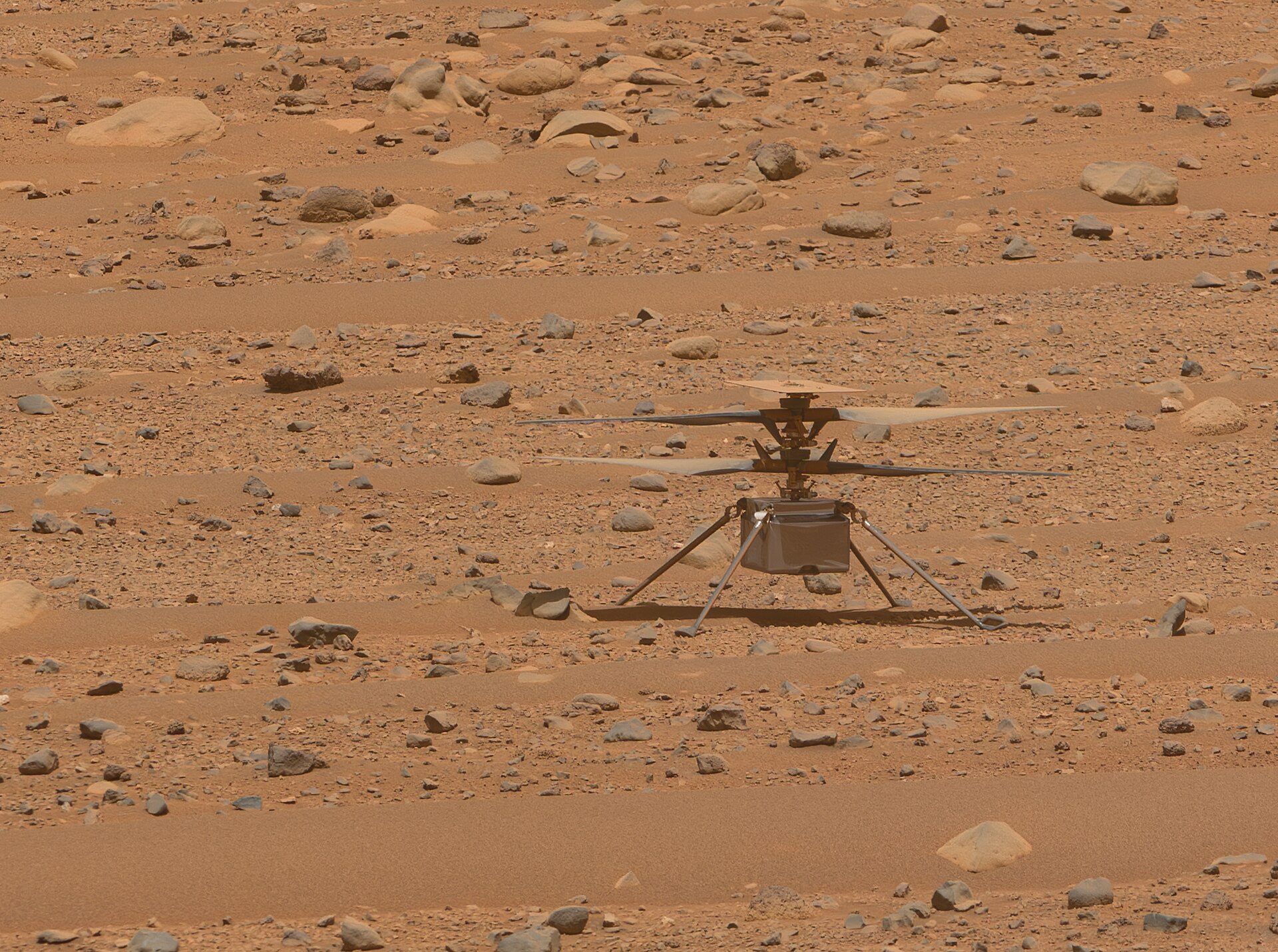
Five flights? Try seventy-two
NASA’s Ingenuity was a technology demonstrator: a tiny helicopter riding to Mars with the Perseverance rover. The plan was bold and short — up to five flights in about 30 Martian days to prove powered, controlled flight in another world’s atmosphere.
On 19 April 2021, Ingenuity lifted off in Jezero Crater and made history as the first aircraft to fly on another planet. Then it kept going. By the time the mission ended in January 2024, it had completed 72 flights, flown far beyond the original test distance, and logged more than two hours of flight time over nearly three years.
Mars air near the surface is less than one percent as dense as Earth’s at sea level. That is thinner than the air on Earth’s highest mountains. Rotors have almost nothing to “grab.” Ingenuity’s answer was spin them very fast — carbon-fiber blades on a lightweight craft about 19 inches tall, weighing roughly four pounds on Earth.
Why thin air changes everything
On Earth, helicopter blades push a thick fluid. On Mars, the same idea needs higher tip speeds, careful weight, and solar power to recharge batteries in the cold. Navigation used a camera watching the ground. Dust, featureless sand, and winter cold all tried to end the experiment early. Software updates and patient operations kept adding flights.
Ingenuity scouted ahead for Perseverance, tested tougher flight profiles, and survived far longer than the brochure promised. Flight 72 on 18 January 2024 ended with damaged rotor blades after a hard landing; NASA announced the mission over on 25 January 2024. The little helicopter stayed upright on the surface, a retired pioneer.
Hangar cheers
Captain, ten, writes “1% air” on the board in big numbers. Co-Pilot, eight, wants a Mars map with 72 tiny takeoff dots. Wingman, six, calls it the bug copter and salutes the rover for giving it a ride.
This is pure hangar engineering: prove rotors work where textbooks say the air is almost missing. Future Mars aircraft will stand on Ingenuity’s flight log.
Try this: thin-air spin talk
Hold two paper strips. Wave one slowly and one fast past your face. The fast strip “feels” more air. That is a kid-scale hint at why Martian blades must spin quick. Then fold a tiny paper rotor (a plus-sign on a pencil) and blow on it outdoors. Talk about density — never about launching toys toward space.
Paper and pencils only. No real drones aimed at “practicing Mars.”
Source note
NASA JPL Ingenuity Mars Helicopter; first flight 19 Apr 2021; 72 flights total; mission ended Jan 2024 after Flight 72 blade damage; designed for ~5 flights/30 sols; Mars atmosphere <1% Earth sea-level density; solar-electric coaxial rotorcraft.
Crew note
Captain makes us say “aircraft on another planet” out loud. Co-Pilot counts to 72 whenever anyone says “five.” Wingman taped a paper Ingenuity to the Perseverance LEGO and declared the hangar a crater.