The Flying Platform You Stood On Like a Surfboard
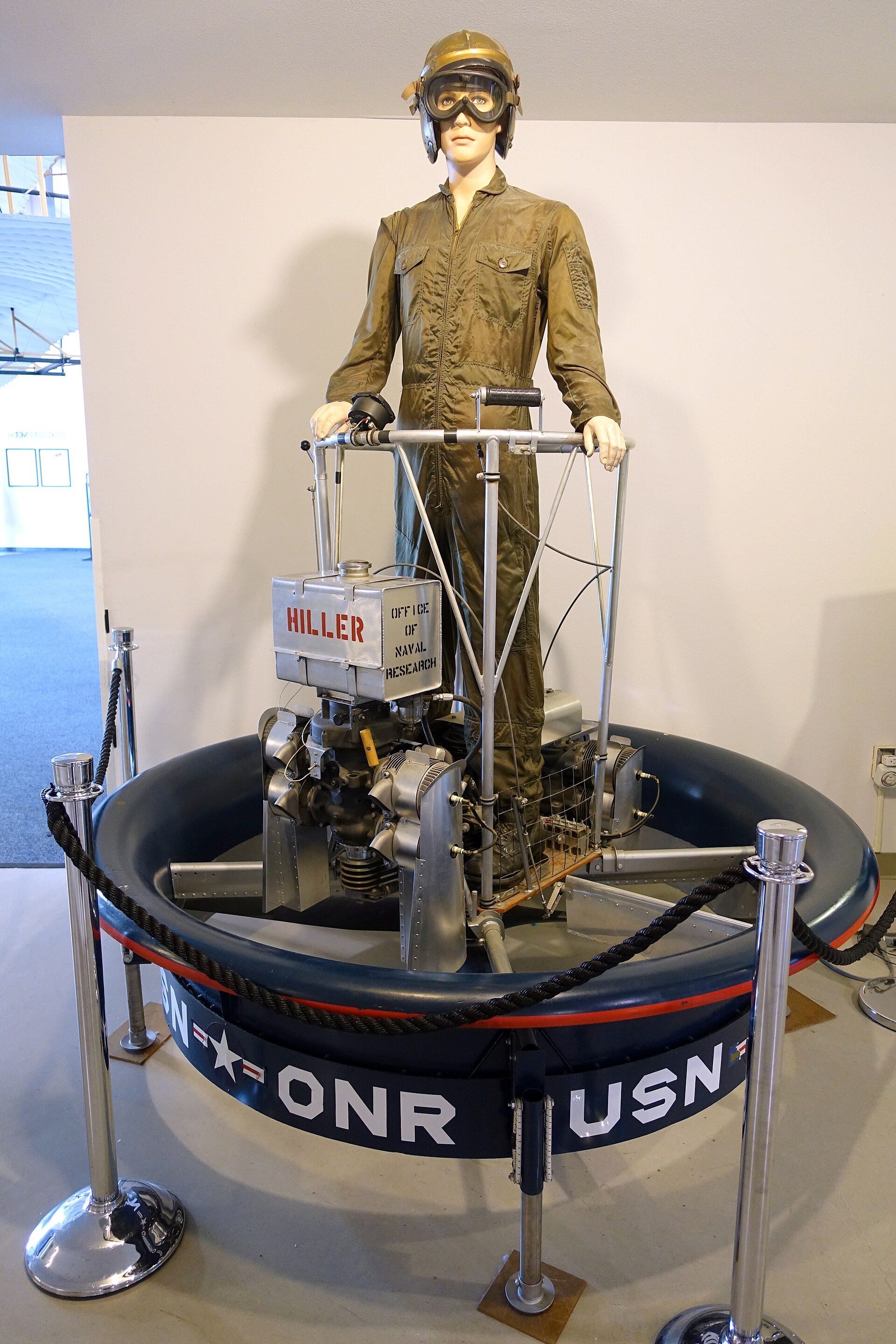
Hiller’s VZ-1 Pawnee was a ducted-fan platform — the pilot stood upright and steered by leaning, like a flying skateboard from the 1950s.
Stand up and lean
Most aircraft give you a seat and a stick. Hiller’s VZ-1 Pawnee gave you a platform and your ankles. The pilot stood on a ducted-fan flying platform and steered by shifting weight — lean left, go left — like a skateboard that hummed.
Built by Hiller Helicopters for U.S. Army interest in the 1950s, the Pawnee used ducted fans (fans inside rings) to push air down. Early versions used small piston engines. The idea was a personal flying platform for scouts: hop fences, peek over hills, land in a backyard-sized spot.
It worked well enough to film and test. It did not work well enough to become standard kit. Stability, engine reliability, and the sheer bravery required to stand on a fan limited the dream. Still, the surviving platform at the Hiller Aviation Museum in San Carlos, California, stops every kid in the aisle.
Ducts, not magic
A duct around a fan can improve efficiency and offer a shred of protection compared with bare blades. The VZ-1’s fans lived under the pilot’s feet. Controls mixed engine power with weight shift. There was no long helicopter boom, no airplane wing — just thrust against gravity and a human acting like a balance board.
Army evaluators learned what you might guess: standing on a loud, vibrating platform in the open is tiring and exposed. Later personal-VTOL ideas moved toward seats, cages, or multicopter layouts. The Pawnee remains the purest “are you serious?” photo in American VTOL research.
Film clips from the era show pilots practicing short hops while the duct lips kick dust. The platform never needed a long runway, which was the whole sales pitch. What it needed instead was calm air, reliable horsepower, and a mission that valued a standing pilot more than a protected cockpit. Those requirements rarely lined up outside the demonstration field.
Hangar balance talk
Captain, ten, tried leaning on a skateboard while explaining ducted fans and fell into a beanbag — science complete. Co-Pilot, eight, wants a museum trip captioned “feet go here.” Wingman, six, practiced standing very still and announced he was cleared for hover, which he was not.
Weird engineering first: the VZ-1 proves control can be your whole body. It also proves that not every clever control scheme survives contact with real missions.
Try this: lean-steer board
Stand on a skateboard or balance board on carpet (helmet if you use wheels outdoors). Have a spotter. Lean gently and feel how tiny weight shifts change direction. That is the Pawnee idea without fans. Then sit down and draw ducted fans under a stick-figure pilot.
No homemade flying platforms. Ever. Museum photos only.
Source note
Hiller VZ-1 Pawnee ducted-fan flying platform; 1950s U.S. Army research interest; pilot stood and steered by weight shift; ducted fans below platform; limited test use; example preserved at Hiller Aviation Museum.
Crew note
Captain wrote “seat optional, brains required” on the board. Co-Pilot wants surfboard decals on the model. Wingman keeps asking if sneakers count as landing gear — yes, on this one.