The Airliner With Tip-Jets on Its Rotor
Fairey’s Rotodyne took off like a helicopter using roaring tip-jets on the rotor, then cruised like a plane — a loud idea ahead of its time.
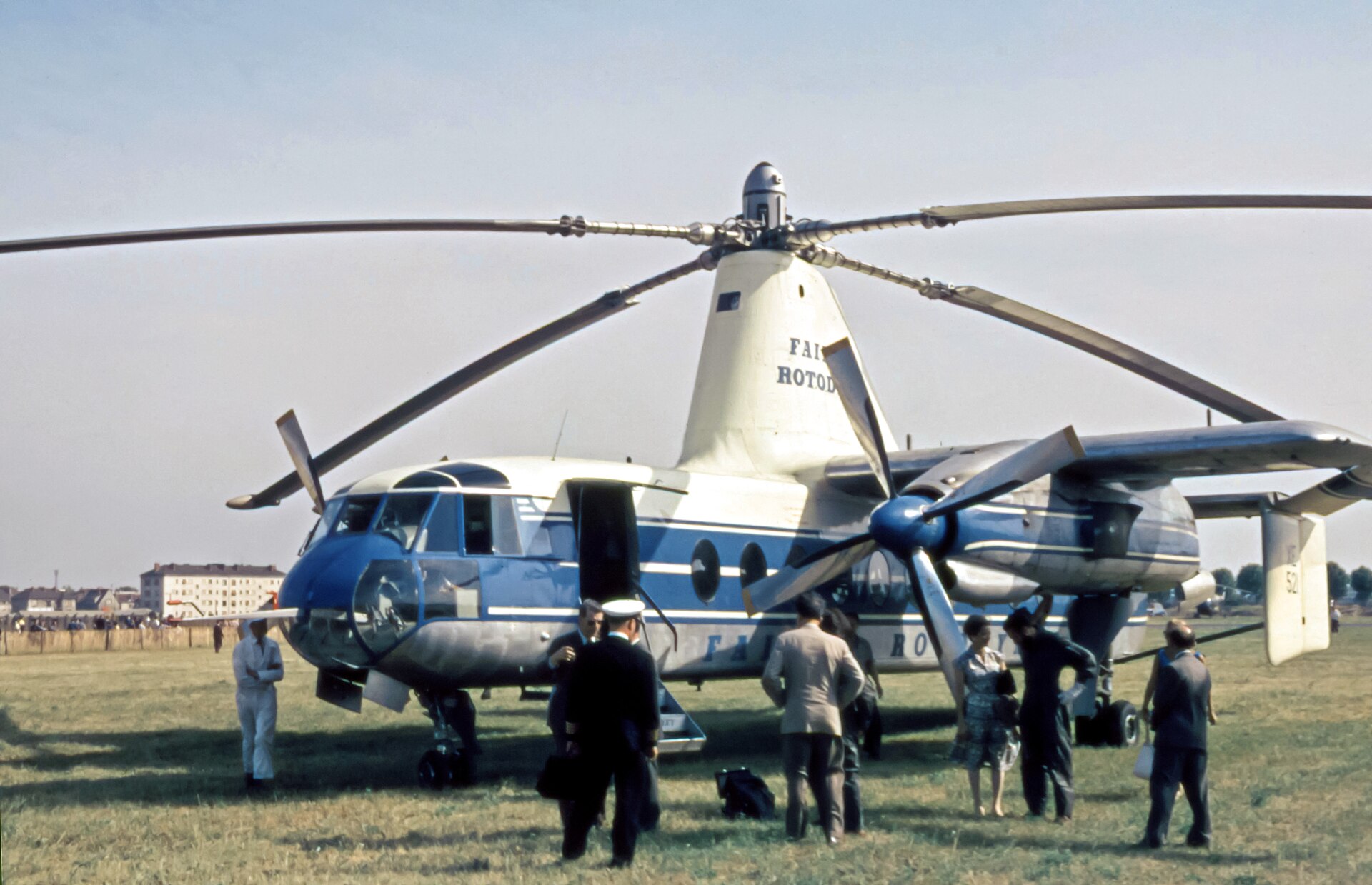
Helicopter takeoff, airplane cruise
The Fairey Rotodyne was Britain’s big bet on a city-center airliner that did not need a long runway. For takeoff and landing, tip-jets at the ends of the rotor blades blasted the rotor around like a helicopter. In cruise, the tip-jets shut down, the rotor autorotated for lift, and propellers on the wings pulled the ship forward like an airplane.
First flight was in 1957. The prototype showed the hybrid could work: vertical-ish city performance plus faster cruise than a pure helicopter of the day. Airlines and military offices were interested on paper. The hangar question was always the same when the tip-jets lit: how loud is too loud for a neighborhood?
The noise problem
Tip-jets make thrust by squirting compressed air and fuel out at the blade tips and burning it. That is clever — no giant anti-torque tail rotor in the same way — and extremely noisy. Community noise doomed more VTOL airliner dreams than any single broken gearbox. The Rotodyne’s roar became the story that outran its performance charts.
Politics and funding finished what acoustics started. The program was cancelled in the early 1960s before a production airliner fleet appeared. Later compound helicopters and tiltrotors chased similar “runway-free yet fast” goals with different hardware.
For Aircraft Fun, the Rotodyne is a perfect engineering parable: solve the flight modes, then discover the city still has ears.
Designers also wrestled with the rotor’s dual personality. Tip-jets gave vertical thrust without sending huge torque through a conventional helicopter transmission in the same way, yet the plumbing and noise followed every landing into town. Wing-borne cruise promised airliner schedules. The gap between a successful prototype demo and a ticketed service turned out to be filled with microphones, budgets, and politics.
What to remember
Captain, ten, draws a two-column chart: “rotor tip-jets ON / OFF.” Co-Pilot, eight, covers his ears whenever someone says “tip-jet.” Wingman, six, named the prototype “Roary,” which is accurate and banned during quiet reading.
No combat chapter needed. This was a transport research prototype aiming at passengers and civil usefulness. Loudness, cost, and timing beat it — not a lack of imagination.
Try this: two-mode paper craft
Make a paper helicopter seed and a paper airplane. “Take off” by dropping the seed (rotor mode). “Cruise” by throwing the airplane (wing mode). Tape them on one poster labeled Rotodyne and explain why one airframe tried to be both. Optional: hum loudly during tip-jet mode, then stop for cruise — the hangar noise lesson.
Paper modes only. No pyrotechnic tip-jets, jokes or otherwise.
Source note
Fairey Rotodyne compound gyrodyne/VTOL airliner prototype; first flight 1957; tip-jet driven rotor for VTOL; autorotating rotor + wing propellers in cruise; cancelled early 1960s amid noise, cost, and funding issues.
Crew note
Captain files this under “why cities hated tip-jets.” Co-Pilot wants ear-protection stickers on the article. Wingman still whispers “Roary” during cruise mode.