The Autogyro That Looked Like a Plane With a Windmill
Cierva’s C.30 (Avro Rota) used an unpowered spinning rotor for lift and a propeller for push — neither airplane nor helicopter, but both.
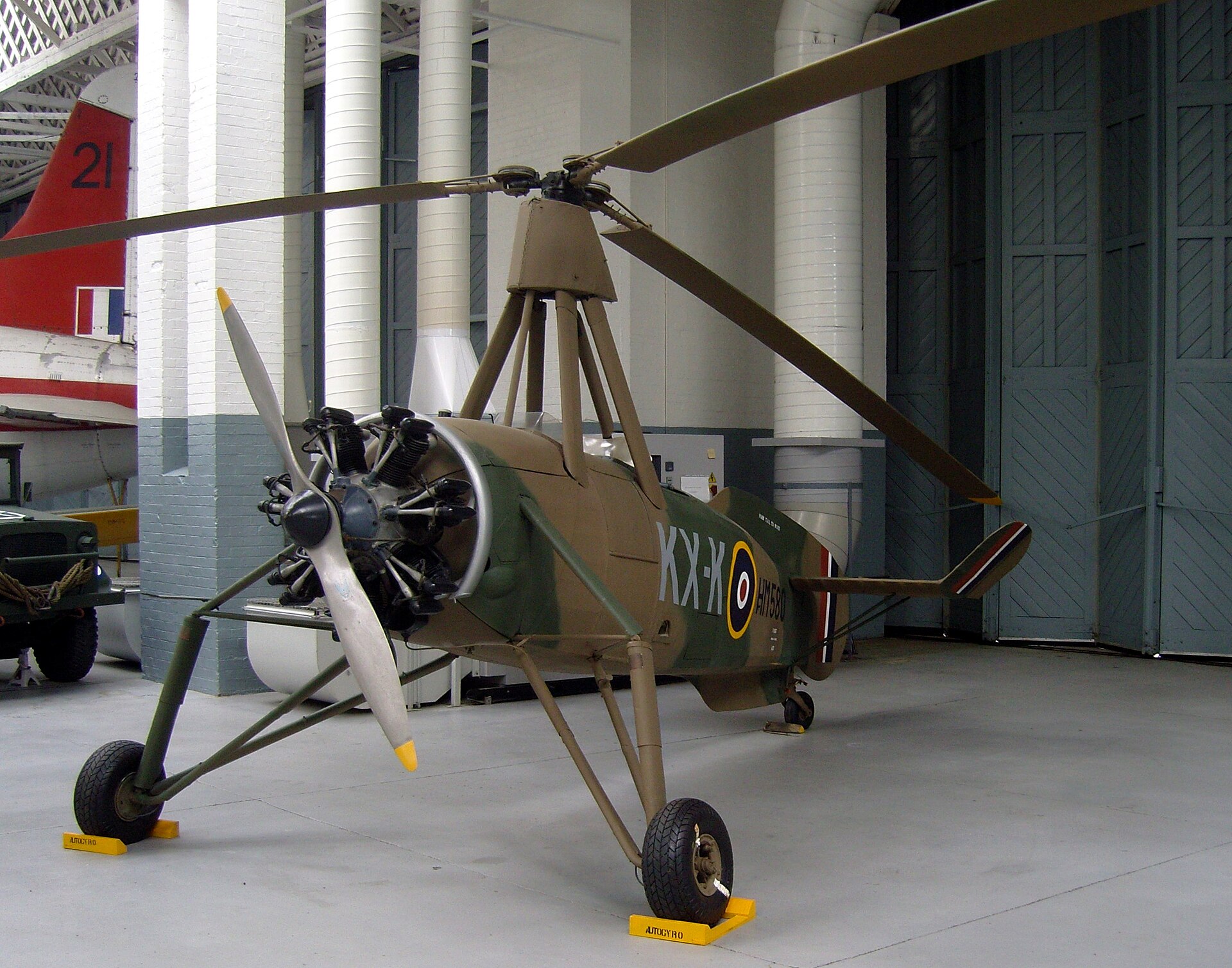
Windmill for lift, prop for go
Juan de la Cierva’s autogyros look like someone crossed a small airplane with a windmill. The Cierva C.30 — built in Britain as the Avro Rota — is the classic picture: a fuselage and propeller like a plane, plus a big rotor on top that is not driven by the engine in normal flight.
Here is the trick. The propeller pulls the machine forward. Air flowing up through the freely spinning rotor makes the blades autorotate and create lift. It is not a helicopter hover in the modern sense. It is a rotating wing that keeps flying as long as air drives it, with short takeoff and landing manners that impressed 1930s pilots.
Cierva spent years solving rotor problems that dumped early autogyros on their sides. The C.30’s direct control — tilting the rotor hub to steer — helped make the type practical. Air forces and civil users flew them for observation, training, and liaison work between the wars.
Not a helicopter (yet)
Helicopters power the rotor and can hover by dumping engine power into the blades. Autogyros usually power a prop and let the rotor freewheel for lift. That difference is the whole hangar lesson. Descend with care and the rotor can keep autorotating — a safety idea helicopters also use in engine-out practice, born from this family of machines.
The C.30 could creep into small fields that scared many fixed-wing pilots of its day. It still needed some forward motion to fly well. Kids sometimes want it to be a hovercar. It is more like a plane that wears a rotor hat.
Surviving Rota/C.30 airframes in museums let you walk around the gearbox, the hub, and the stub wings. Look at how little “airplane wing” is left once the rotor does the lifting.
Brothers on the rotor
Captain, ten, writes “autorotation = windmill lift” on the board. Co-Pilot, eight, spins a pencil between his palms to demonstrate and drops it. Wingman, six, calls it the windmill plane and salutes every ceiling fan, which is now a hangar rule we pretend not to notice.
Try this: paper autorotation
Cut a paper helicopter seed (the classic two-blade strip with a folded weight). Drop it from a chair. Watch it spin as it falls — air driving the blades. That is a toy cousin of autorotation. Then fold a paper airplane and compare: one falls spinning for lift, one glides on fixed wings.
Chair height only. No climbing roofs to “be Cierva.”
Source note
Cierva C.30 autogyro (Avro Rota in UK production); 1930s; unpowered rotor for lift via autorotation; engine-driven propeller for thrust; direct rotor-hub control; used for training/observation; bridge between fixed-wing and helicopter ideas.
Crew note
Captain refuses to call it a helicopter in the type line. Co-Pilot wants a windmill sticker on the toolbox. Wingman asked if ceiling fans can take off if we run fast underneath — answer: no.