The Blended-Wing Mini Jet That Looked Like a Manta Ray
NASA and Boeing’s X-48 was a small unmanned blended-wing-body jet — a flying experiment in quieter, greener airliners of the future.
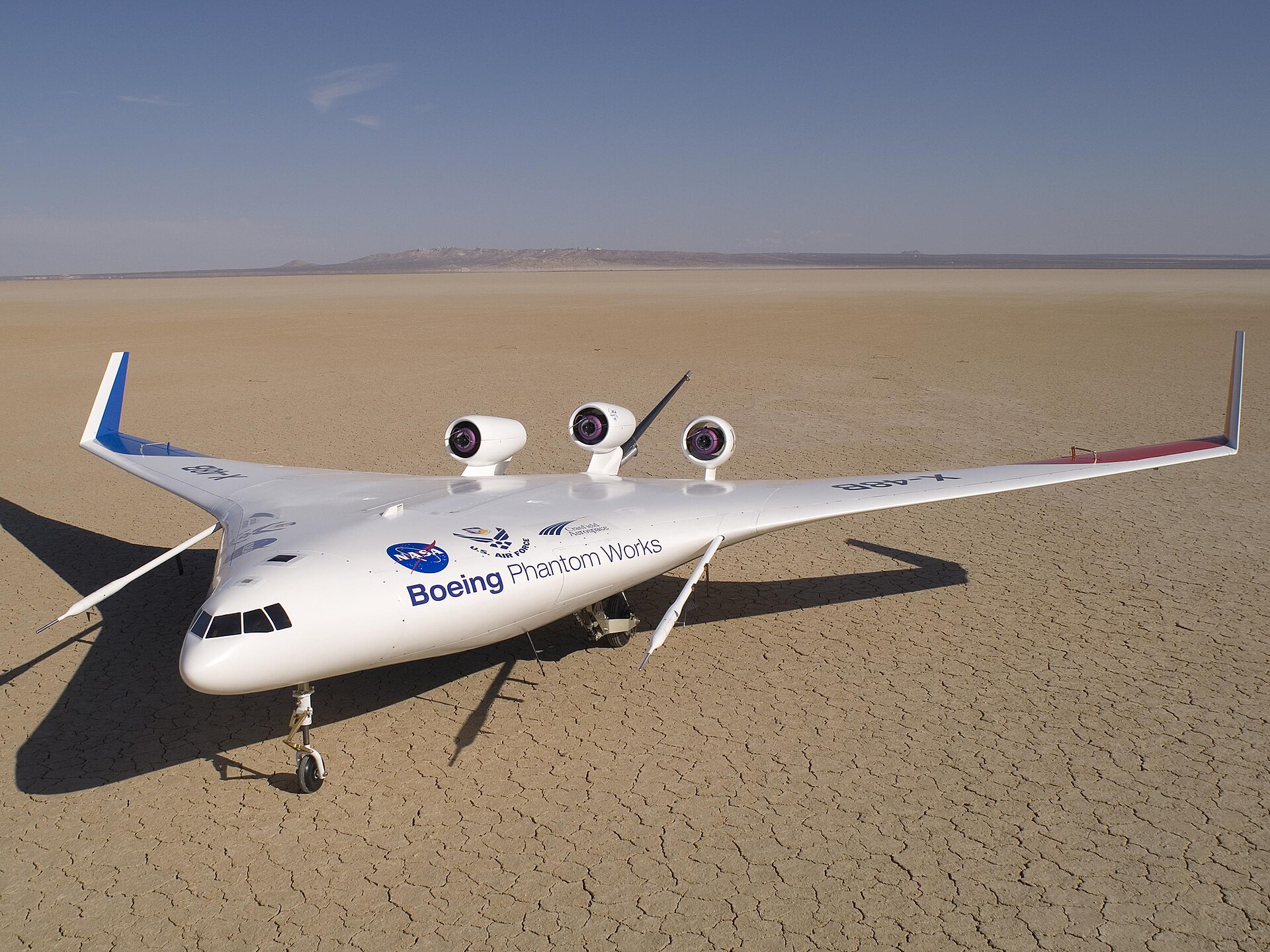
Manta ray with jet engines
The Boeing X-48 did not look like a mini airliner. It looked like a manta ray that swallowed three small jets. Built as an unmanned research model for NASA and Boeing, it tested a blended-wing-body (BWB) shape: the wide center body blends into the wings so the whole airplane is one smooth lifting surface.
Engineers flew X-48B and later X-48C versions at NASA’s Dryden (now Armstrong) Flight Research Center in the late 2000s and early 2010s. The models were about 8.5 percent of a notional airliner size — big enough to learn real flight behavior, small enough to risk in research. Carbon-fiber shells, remote pilots on the ground, and lots of sensors.
The goal was not a toy. The goal was data: how a BWB climbs, turns, stalls, and handles engine-out cases compared with a tube-and-wing jet.
Why blend the wing and body?
A classic airliner is a pressurized tube with wings bolted on. That works. It also leaves a lot of fuselage that does not make much lift. A blended wing spreads the cabin into a wide center section that helps carry weight. In theory you get less drag for the same lift, better fuel burn, and a shape that can bury engines on top of the aft body — which can also help with noise on the ground.
Theory needs flight. The X-48 program explored control laws for a shape that does not behave like a 737. Early BWB ideas can be hard to control at high angles of attack. The research team mapped those edges carefully. The X-48C variant changed the aft body and vertical surfaces to study a quieter, more airliner-like layout.
No paying passengers ever sat in an X-48. That is the point of a subscale UAV demonstrator: learn before you build a 200-seat version.
Hangar takeaway
Captain, ten, sketches tube-wing vs manta and labels “less drag?” with a question mark, which is honest. Co-Pilot, eight, wants stickers that say “not a spaceship.” Wingman, six, calls it the ray jet and asks if it flaps. It does not flap. It flies with elevons and smart computers.
Future airliners may still look mostly conventional. Or a BWB may finally win on fuel and noise. Either way, the X-48 is a clean hangar example of research aviation: weird shape, careful tests, engineering first.
Try this: blend a paper body
Fold a normal dart. Then fold a second plane where the “fuselage” is a wide triangle that melts into the wings — more skateboard deck than pencil. Launch both. The blended one often floats differently. Talk about lift coming from more of the airplane’s skin, not just skinny wings.
Keep it paper. No garage “airliner of the future” with real turbines.
Source note
Boeing/NASA X-48 blended-wing-body UAV; X-48B/C flown at NASA Dryden/Armstrong ~2007–2013; ~8.5% scale research model; studied BWB handling, control, and low-noise configuration ideas for future airliners.
Crew note
Captain files this under “future cabin shape,” not combat. Co-Pilot wants a manta-ray sticker on the hangar door. Wingman practices “blended-wing-body” until it sounds like one word.