The Plane Whose Rotors Flip Like Wrists
NASA’s Bell XV-15 proved tiltrotors work: rotors point up to hover, then tilt forward to fly fast like a plane — the grandparent of the Osprey idea.
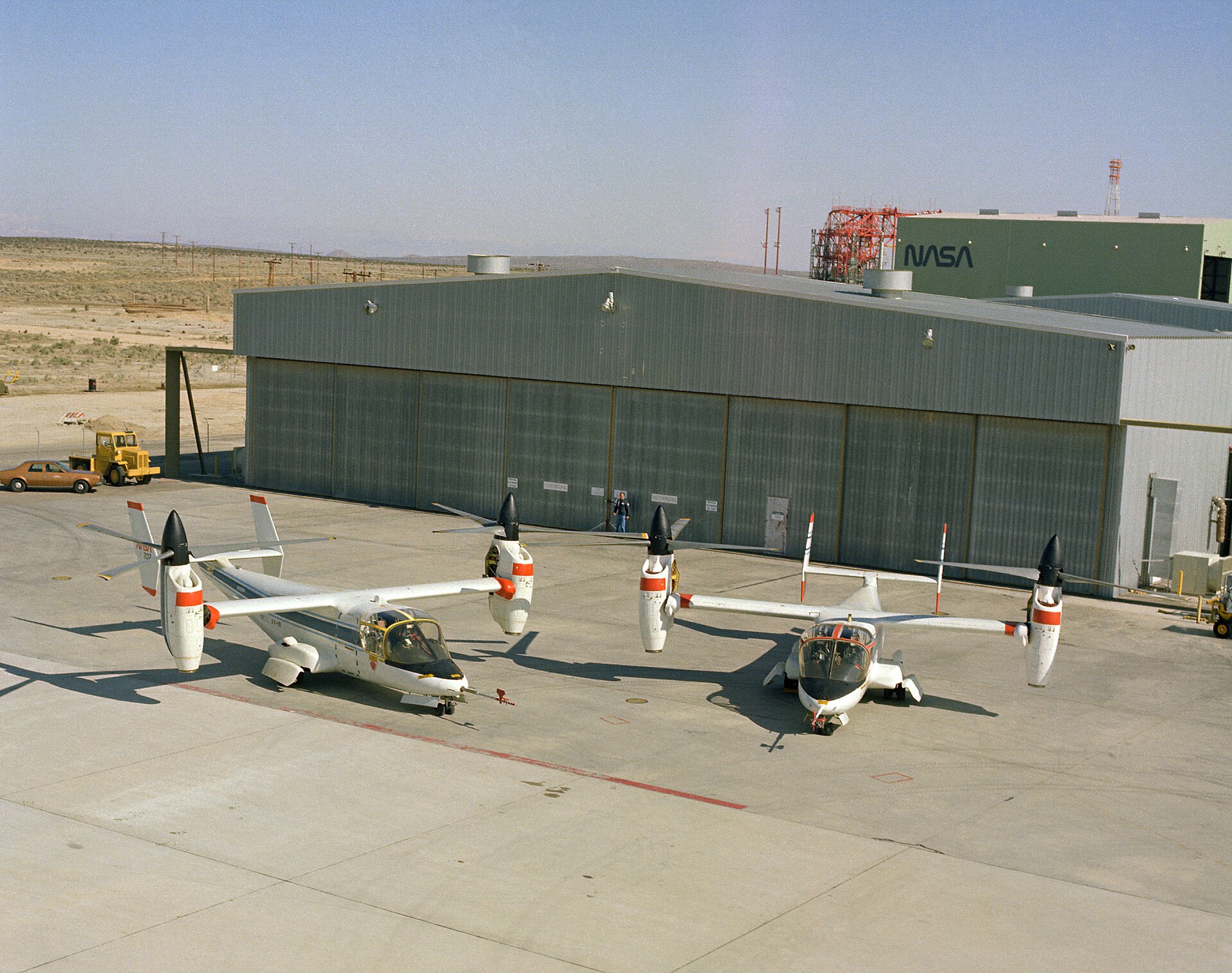
Rotors that change jobs
A helicopter’s rotors point up. An airplane’s props point forward. The Bell XV-15 asked: what if the whole rotor nacelle tilts from one job to the other?
Built by Bell with NASA and Army support, the XV-15 was a research tiltrotor that first hovered in 1977 and transitioned to airplane mode in 1979. Large rotors at the wingtips stood vertical for takeoff, then tilted forward for cruise. Wings carried the ship in airplane flight while the rotors acted more like big propellers.
The point was proof. Could pilots and computers manage the conversion corridor — the awkward middle where you are neither pure helicopter nor pure airplane — safely and repeatably? The XV-15 said yes often enough to change what designers believed was practical.
Research grandparent
Later tiltrotors, including the V-22 Osprey family, stand on this research even when news stories chase other angles. In this hangar we stay on the XV-15’s job: validate the mechanics, the aerodynamics, and the flying qualities. NASA used it for studies on noise, handling, and civil tiltrotor ideas. Two XV-15s flew research campaigns for years.
Tiltrotors promise helicopter-like landing spots with airplane-like cruise speed. They also demand complex gearboxes, precise controls, and careful pilot training. The XV-15 made the promise measurable instead of mythical.
Pilots trained to think in modes. Helicopter mode meant collective and cyclic habits. Airplane mode meant more conventional wing-borne flight. The conversion corridor in between demanded smooth nacelle rates and attention to rotor loads. Research flights mapped that corridor so later designers inherited numbers instead of guesses. Civil studies asked whether tiltrotors could link city vertiports without dragging a helicopter’s slow cruise across a whole region.
One reason the XV-15 photos still stop traffic is the mid-transition silhouette: rotors halfway between up and forward, wings already working, landing gear deciding whether it is a helicopter or an airplane that day. That freeze-frame is the invention.
Hangar conversion drill
Captain, ten, holds his arms up like rotors, then tilts them forward on a “transition” count. Co-Pilot, eight, times him. Wingman, six, falls over during conversion and claims it was a research mishap.
Watch videos of an XV-15 transition and you will see why kids get hooked: the silhouette changes mid-flight. That moving geometry is the entire invention.
Try this: wrist-tilt model
Build a simple cardboard wing with two paper-clip “rotors” on the tips that can pivot from vertical to horizontal. Narrate a takeoff (rotors up), a transition (slow tilt), and cruise (rotors forward). No motors. Talk about why the middle phase needs practice.
Cardboard only. No real rotor experiments.
Source note
Bell XV-15 tiltrotor research aircraft; NASA/Army/Bell program; first hover 1977; first full airplane-mode transition 1979; wingtip tilting rotors; research basis for later tiltrotor designs; engineering/demo focus.
Crew note
Captain insists we say “research aircraft,” not “battle story.” Co-Pilot wants a hinge diagram on the hangar wall. Wingman practices wrist-tilt until snack time.