The Real Flying Saucer That Barely Left the Ground
The Avrocar looked like a UFO on purpose — a circular “air jeep” that hovered on a cushion of air but never became the sky-car of sci-fi dreams.
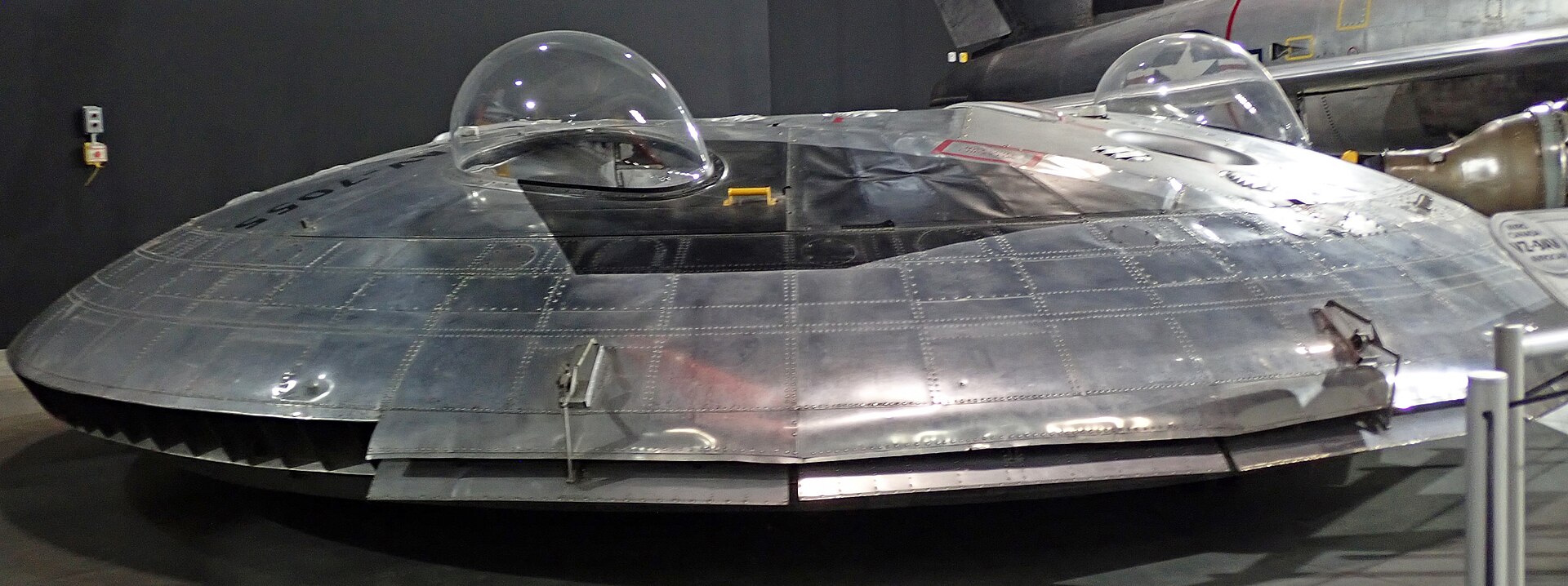
A UFO with a project number
The Avro Canada VZ-9AV Avrocar was a real circular aircraft funded in the 1950s by U.S. and Canadian interest in a flying jeep. It looked like a saucer because the engineers chose a disk: a big center fan system in a round body, meant to dump air downward for vertical takeoff and then somehow cruise away.
Movies promised sky police cars. The Avrocar delivered something closer to a noisy air cushion that struggled to rise more than a few feet with stability. Hot exhaust, tricky controls, and the physics of a disk in ground effect all ganged up on the dream.
Two prototypes were built. Pilots sat in bubble cockpits on the disk. The machine could hover in a limited way and slide around test areas, but it never became a battlefield taxi or a highway flyer. By the early 1960s the program ended. The saucer went to museums instead of production lines.
Why the cushion failed the sci-fi test
Dumping air under a round body can make a hovercraft-like cushion. Leaving that cushion and flying like an airplane is a different problem. The Avrocar’s turbojet-driven central rotor system fought stability issues — pitches and wobbles that made high hover uncomfortable and fast forward flight a fantasy.
Engineers learned hard lessons about ducted fans, ground effect, and control power. Later VTOL programs used different layouts: tiltrotors, lift jets, compound helicopters. The Avrocar remains the purest hangar punchline that still deserves respect: someone actually built the saucer and measured what it could not do.
Ground-effect flying feels magical until you try to climb out of the cushion. Pressure under the disk changes with height, so a machine that is happy at three feet can get moody at ten. The Avrocar’s test reports read like a conversation between ambition and that moodiness. Museums keep the hardware so the conversation stays physical: you can walk the rim and see how small the cockpit bubbles look on such a wide rumor of a flying car.
Hangar reaction
Captain, ten, labels photos “real project, not movie.” Co-Pilot, eight, wants aluminum-foil saucers for the shelf. Wingman, six, ran in circles making hover noises until Co-Pilot claimed airspace rights.
Failure stories belong in a kids’ aviation magazine when they are honest. The Avrocar did not conquer the sky. It conquered a few feet of test pad and a permanent place in weird-engineering history.
Try this: disk hover craft (balloon)
Tape a spool or bottle cap under a paper plate. Blow up a balloon, stretch the neck over the spool, and let air leak so the plate skates on a smooth floor. That is a toy air cushion — Avrocar-adjacent, not Avrocar-equal. Talk about why leaving the floor cushion is the hard part.
Indoor floors only. No real jet engines, no driveway “UFO tests.”
Source note
Avro Canada VZ-9AV Avrocar; 1950s–early 1960s disk VTOL research; U.S./Canadian interest as flying jeep; central fan/turbojet arrangement; limited hover in ground effect; program cancelled; prototypes preserved in museums.
Crew note
Captain will not let us say it “almost replaced cars.” Co-Pilot draws seat bubbles on every circle. Wingman insists the hangar has been visited by exactly zero aliens and one Canadian saucer photo.